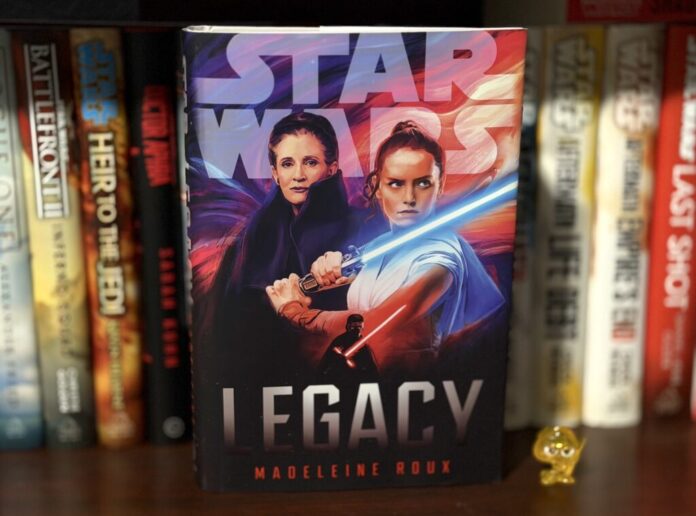

The latest Star Wars novel gives fans a closer look at Rey and Leia’s relationship before Episode IX, but this book does a lot more than just “fill in the gaps.” Check out our review!
Star Wars: Legacy
Written By: Madeleine Roux
Published By: Random House Worlds
Release Date: July 28, 2026
Purchase [Affiliate]: https://amzn.to/3SWXIWF
This month brings a Star Wars book I’ve been looking forward to for a while now. Rey and Leia’s Master/Apprentice dynamic was one of my favorite aspects in The Rise of Skywalker, and something I desperately wanted more of. I’d wanted more Leia in general, but the decision to adjust the story around existing footage limited that potential. Still, as a fan who grew up on the old Expanded Universe stories and greatly enjoyed when Leia got to flex her Jedi skills, I was thrilled at the idea.
Thanks to Legacy, we get a whole lot more of that in action, along with some fun tidbits of new details on her own—short—training with Luke. Plus, we get an all new adventure with Rey showing how she grows into her role as a Jedi. All around it does a great job of filling the gap between the last two Sequel films.
Don’t get that wrong, however, this novel is about much more than simply bridging the films. The way it examines the Light Side of the Force, even the Skywalkers in general, is something I’ll be thinking about for a long time. What’s more, it’s a story that dramatically impacts how I’ll watch the Sequels going forward.
But I’m getting ahead of myself here. Let’s talk a little—just a little as I don’t want to get into any spoilers—about the story you’ll be diving into.
The Story
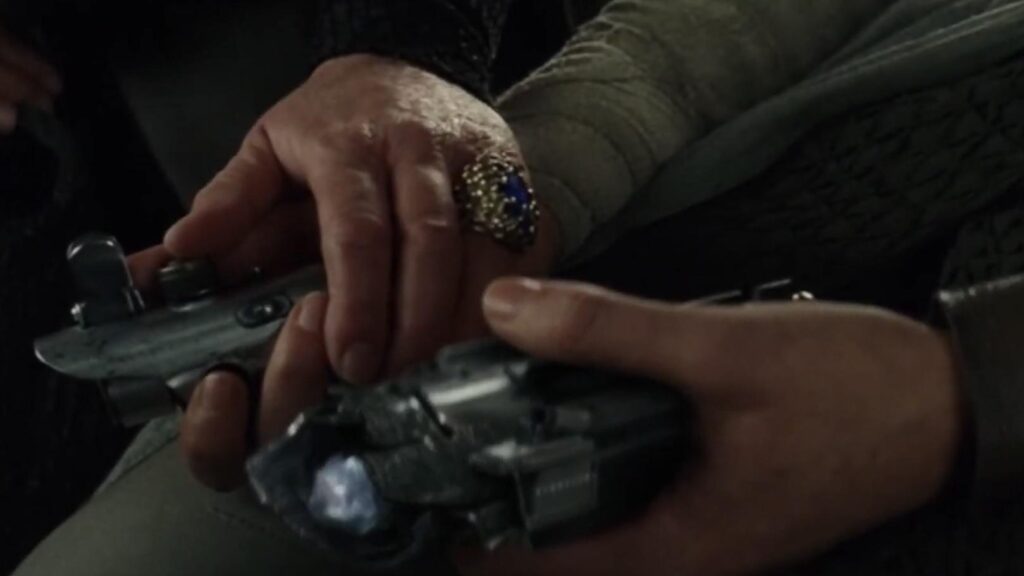
The bulk of Legacy‘s plot puts the focus on Rey and Leia as they journey away from the current Resistance base on an excursion to the historical Jedi planet of Tython (seen visually in The Mandalorian). Rey is dead-set on fixing Luke’s Lightsaber, which was split during her fight with Kylo Ren, feeling it’s a necessary step in her path to being the Jedi worthy of the legacy she’s been entrusted with.
After failed attempts, a hidden clue in the ancient texts Rey…ah, liberated from Luke on Ahch-to, leads her to believe an ancient temple on Tython holds the key. The pair, along with Chewbacca and Threepio, head to the planet and find more than an ancient Jedi Temple waiting for them. Sheltering near the temple are a group of refugees, led by a Church of the Force minister.
Gavrin and Ziff, a pair of young, eager freedom fighters are among the refugees; hiding out after a failed attempt to assassinate the First Order officer, Major Brilla Wolstenholme, in charge of their planet. As they plot and dream of completing their mission, Brilla is desperately hunting them to exact justice. Rey and Leia must work alongside these refugees to unlock the mysteries of the temple and fix the Lightsaber before the First Order manages to find them.
Between skeptical, hot-headed freedom fighters eager for revenge, the dangerous secrets of Tython’s temple, and her own misgivings about accepting, Rey has her work cut out for it. If she’s going to succeed in conquering her own fears/darkness and bring the Jedi back to the galaxy, she’ll need every bit of help she can get…whether she wants it or not.
It’s a fun story and stays laser-focused on its characters. It isn’t a sprawling, planet-hopping adventure like other Star Wars tales, but this allows for a great deal of deeper character work that helps bridge the films and leave you wanting more Rey and Leia sidequests.
Characterizations
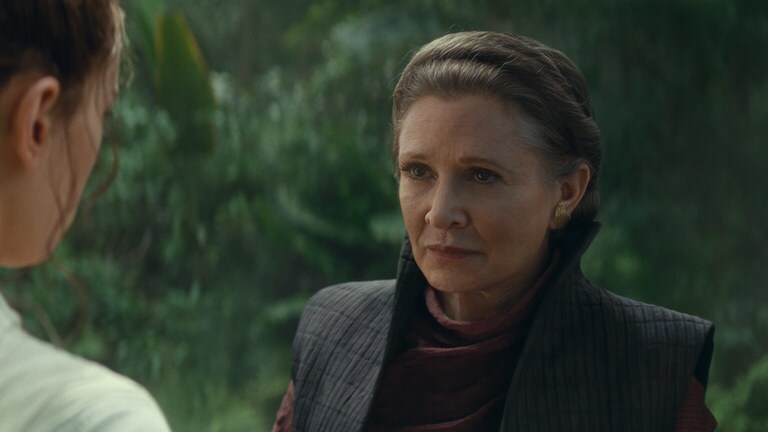
Easily one of the most impressive aspects of Legacy is how thoroughly Madeleine Roux nails these iconic characters. She manages to capture Rey’s nature expertly; mixing in her sense of wide-eyed wonder (the wider galaxy is still very new to her), the anxiety over the massive burden she carries, and the earnestness she brings to every task. Moreso, the novel does an excellent job of showing her growth between the end of The Last Jedi and where she’s at at the beginning of The Rise of Skywalker.
She’s still reeling from her “failure” with Kylo/Ben and grappling with the weight of carrying the Jedi Order forward. In TROS, we see some of this uncertainty, but there’s also more confidence in how she carries herself and uses the Force. By the beginning of that film, it’s clear she’s no longer the lost young woman desperate for a teacher, but someone who has a better understanding of what they’re capable of. This is not unlike Luke’s change between Empire Strikes Back and Return of the Jedi.
It can be tough to deal with familiar faces in these stories. With Rey, however, so much of her journey is largely unknown. We really only see what’s been shown in the flicks, which allows authors a little more leeway in how she’s presented. Even so, I was impressed with how well Rey is brought to life in this story. Roux manages to expertly convey all those elements of the character we’ve seen in all the films and apply them to new situations.
Then there’s Leia, a character who’s been so clearly defined for multiple generations. These type of legacy (no pun intended) figures can be tough to characterize in a story. There are a lot of expectations to contend with from audiences who already have an idea of how this character would act in a variety of situations. Roux handles it effortlessly and delivers a Leia story I’ve long been waiting for.
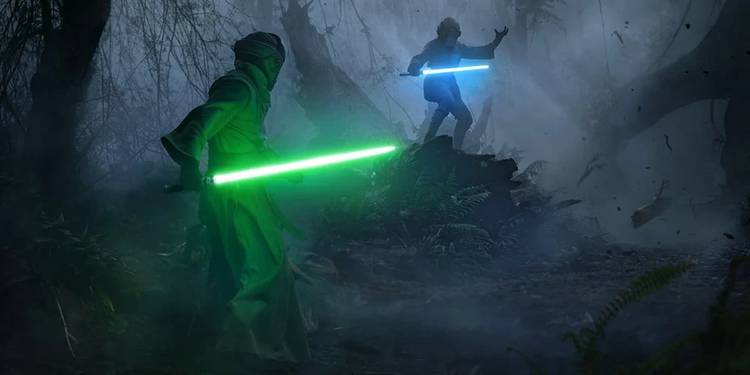
Not only does she capture the big stuff (i.e. Leia’s mannerisms, cadence in how she talks, diplomatic skills, etc), Roux expertly highlights the nuance of the aging Rebel. The tired commander who’s eager to be done with war, but knows it’s not quite time. The mentor who wants to pass the torch, while still having her own doubts and struggles. It’s an impressive blend that makes this character, at this specific time, feel more like Leia than ever before. Moreso, we get glimpses of Leia’s own training and the reasoning she has for working to pass on her—more limited—Jedi knowledge on to Rey.
The new characters introduced specifically for this story are great as well. Not only do they manage to add something unique to the story while feeling very much of the galaxy far, far away. Within just a few short introductory pages, these characters felt like distinct individuals with a deep history. One that only grows as the story continues and gives us more details on how they came to be.
All of the main players have interesting/engaging characters arcs. Fleshing out what would normally be mere side-characters to move the plot forward into dynamic characters you can’t help but want to know more about. Even Brilla, who’s story is almost entirely separate from the other events of the book, is compelling in her own way.
Normally, when the story is set up in this fashion, where the parallel plots’ characters don’t really intersect (though it all ties together in a neat way), I sometimes struggle with staying invested in their chapters. As if, every time the story shifts from the main characters—what feels like the primary plot—I found myself hurrying to get through those chapters in order to get back to the “real” action. Legacy doesn’t have that problem and gives Brilla’s story/arc a strong enough thematic hook that kept me highly engaged even as it pulled us away from the main story beats.
Exploring the Force
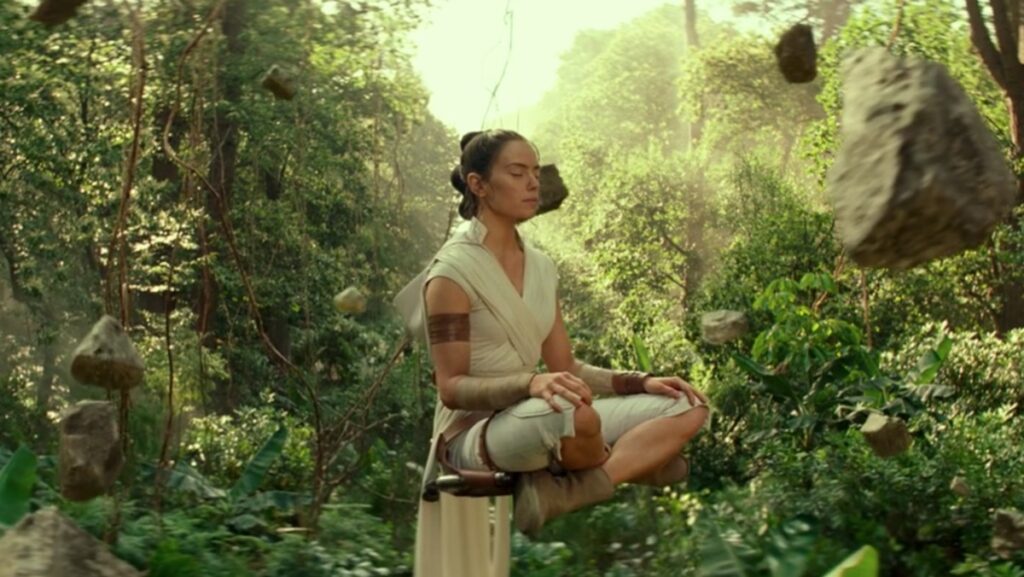
Easily my favorite aspect of Legacy, however, is how the novel dives deep into the nature of the Force. One of the things that struck me during my read, is how much it works as a direct companion piece to Adam Christopher’s (excellent) Master of Evil. It’s hard to explain, and there’s every chance I won’t successfully convey my point here…but I’m gonna try.
Both Legacy and Master of Evil share a number of interesting elements. Both are centered on an iconic Force user on the hunt for something ancient they can use to further their own abilities. Both feature a secondary—somewhat antagonistic—character who are true believers in the fascist regimes they work for (Empire/First Order). Their personal journeys ultimately bring them to the understanding the core foundation of their beliefs don’t care for them and see them as little more than means to an end. A revelation that shakes them and offers readers insight into the insidious nature of such regimes.
The biggest similarity, however, is how each of these novels approach the Force. By and large, the point of both stories aren’t so much the plot beats we follow, but how they delve into the essence of that mystical energy which binds the universe. Both novels take a more mystical approach to the Force, making the stories more fantastical than Sci-Fi, and lean heavily into those magical/unexplained elements of it.
I know that’s not the approach every fan enjoys. Some prefer the more logical, science fiction approach to the galaxy far, far away in which there are any number of great books to enjoy. There was a time, especially in the old Expanded Universe, where even parts of the Force began to feel too clinical. The impossible became boiled down to techniques that simply needed to be taught/remembered.
There have been some instances in the new canon where I’ve feared things were moving that way; but how Legacy and Master of Evil treat the Force does an excellent job of pulling it all back. Instead of making things seem too “out there” for Star Wars, the fantasy element is what keeps the mystery part of the Force alive. It’s what makes you think anything is possible, even when we know how the story ends (these are both technically prequels).
Where one explores the Dark Side, the other uses a very similar approach to the Light Side. Due to the nature of the Dark Side itself, this quality lent a more gothic-horror quality to Master of Evil. With Legacy, however, we have the converse side of things. It maintains the more esoteric/mystical level of things, but because of the Light Side influence, the story almost feels more in line with something like high fantasy; filled with hope and magic that can heal things.
Legacy goes to great lengths to explore the nature of the Force and delves into what balance actually looks like. Rey’s struggle to come to terms with the darkness within her and find peace,not only gives us a deeper insight into her character, but how the Light Side manifests in its practitioners. There are some hard lessons she must contend with, but necessary in order to become the hero the galaxy needs.
Tying Things Together
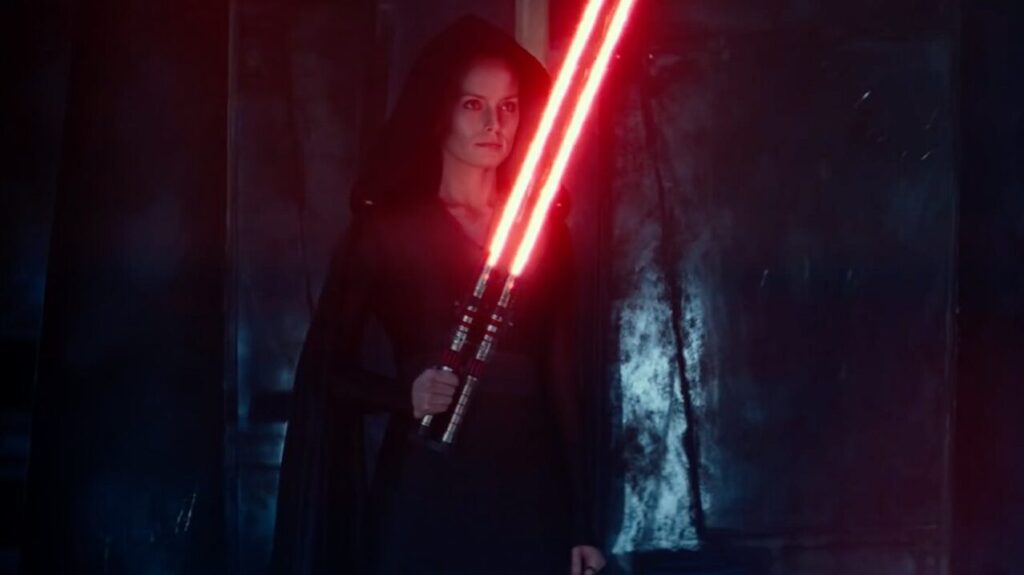
Of course, an important element of Legacy is how it works to connect things between the films. It does, in fact, fill in a number of interesting gaps between films. We get some background information on some stuff from The Rise of Skywalker, but I was surprised—very pleasantly—to see how much the novel adds insight to certain events in The Last Jedi.
I want to make it abundantly clear, however, this novel is not purely a “fill the gaps” type of story. That’s explicitly not its purpose, nor does it read like it’s running through a checklist of items needed to be covered. Instead, these moments/revelations appear at very natural points in the story. Nothing feels thrown in just to be a neat connecting point or simple Easter egg.
The result is a bridging story that doesn’t merely connect to the films it’s set between, but enhances those separate stories.
Honestly, this feels like exactly the kind of book I wanted while we were waiting for Rise of Skywalker to hit. I’ve long made it clear that my biggest issue with the Sequel trilogy was the lack of exploratory material between the films. Some of this is due to the movies themselves not having much of a time gap, but also the “mystery box” element of keeping every plot point locked down.
Where the Prequels had tons of books/comics to keep the characters and events fresh in fans’ minds, the Sequels didn’t really. The one we got, Resistance Reborn, was pretty damn great and showed the potential of filling in that time period, however. But that’s a discussion for another time.
Regardless, we have Legacy now and it re-contextualizes certain moments in the films that will definitely alter how you watch them. I enjoyed TROS more than the average bear, but there are some head scratching decisions we can all recognize. While I hate to say it “fixes” some things in that film, Legacy definitely smooths out some of the edges (like how Clone Wars worked to even things out in the Prequels).
It’s also nice that the adventure here takes place over a short period of time and is rather self-contained. This leaves plenty of room for more stories during this period of time and sets the stage quite nicely for more Rey and Leia stuff if Lucasfilm chooses to explore it.
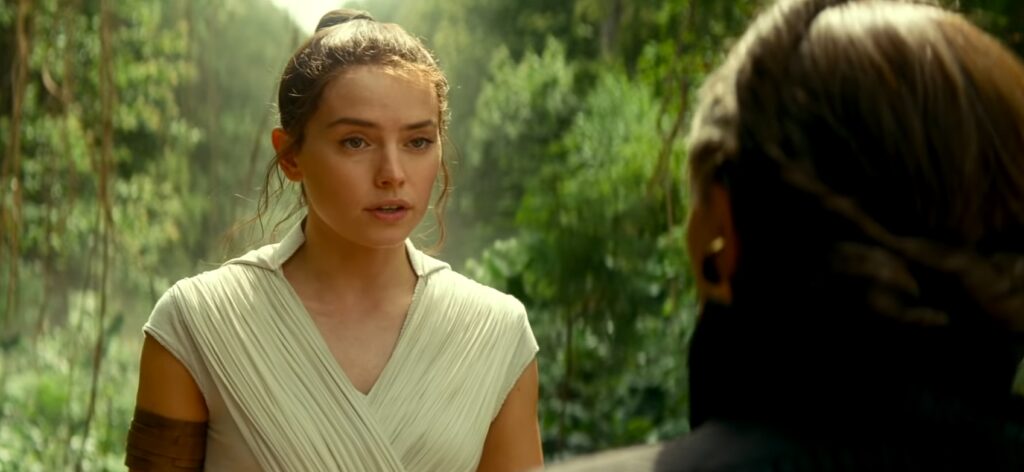
All in all, Legacy delivers on everything I could have hoped for out of this kind of story. We get some great Leia and Rey moments, plus an engaging—surprisingly action-packed—story, with some badass moments and character beats. Between Roux’s fluid writing, great characterizations, and how the story adds depth/context to the films, Legacy feels like essential reading for anyone interested to any degree in the Sequel era.